Take 30 minutes to walk through your home. Imagine the ground movement of a significant earthquake. Identify potential hazards and make a list of them so you can start fixing them.
• Check your water heater. Is it securely fastened to the wall studs with heavy-metal strapping at the top and bottom? Do not use metal plumber’s tape.
• Does your water heater have flexible water and gas connectors?
• Tall pieces of furniture are especially vulnerable in earthquakes. Identify each bookcase, cabinet and armoire which needs fastening.
• Identify heavy or breakable objects on high shelves. Pay special attention to objects with sentimental value. Move heavy objects to lower shelves.
• Identify electronics, microwaves and other small appliances that need to be secured.
• Identify hanging objects, especially plants in heavy baskets and hanging lights near windows.
• Identify mirrors, framed artwork and other heavy hanging objects which need to be secured to the wall studs. Pay special attention to items hung over beds.
• Identify kitchen, bedroom, and garage cabinets that need to be secured to keep their contents inside during the ground shaking.
• Does your chimney have loose bricks? Has your attic been reinforced with plywood to help prevent chimney bricks from falling into living areas?
• Identify poisons, toxics, or solvents in breakable containers that are located in high or dangerous locations, house, garage and sheds.
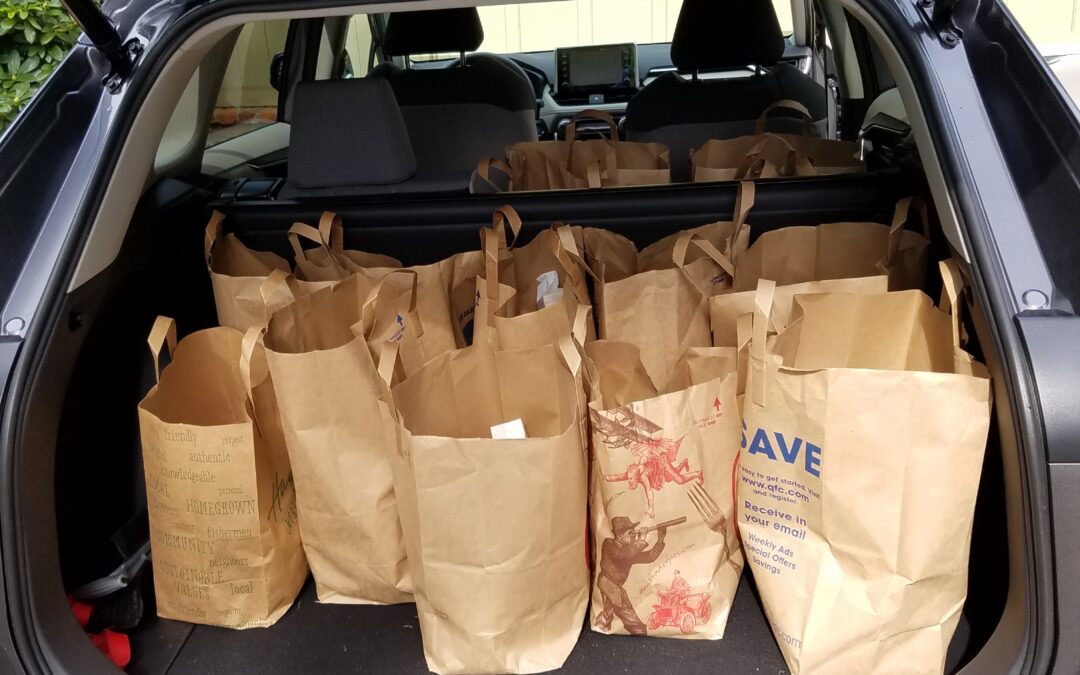
The holiday season is fast approaching and the next Totes delivery will be for December! I will take our items to Maywood Hills Elementary in Bothell right after Thanksgiving. Please don’t forget Totes in the swirl of holiday preparations. As a treat for the season, it would be great if we could add some (individually wrapped) Christmas goodies. Maybe small candy canes, cookies, etc. Holidays can be pretty sparse for families who risk missing regular meals!
For those who aren’t sure about Totes, it’s a program to provide weekend food for kids who are at risk of missing meals when the school cafeteria is closed. We know that hungry kids can’t learn well, so we help get them to school on Mondays without being “starving”! Qualifying children pick up a backpack with a variety of food items on Friday afternoons and return the empty pack on Mondays. Only a very small number of people know who the beneficiaries are, certainly no one from WUUC.
Please watch for occasional e-mails about Totes needs on the WUUC chat. Many, many thanks to our regular donors, and to everyone who has supported this program! If you have questions or comments, contact John Hartman or Grace Simons, co-coordinators.
Shelter in place is not the same as “staying inside” a building. Sheltering in place is creating a “safe room” in your home. A true shelter-in-place order is because of a chemical, biological or radiological threat. If a chemical agent leak happens (i.e. ammonia, radiation, hazardous materials), authorities will instruct people to either shelter where they are and seal the premises (shelter in place) or evacuate immediately. A chemical release is an accidental release of harmful chemicals into the air.
Before an Incident
To properly shelter-in-place you will need to prepare a “safe room” in advance. You will likely need to stay inside several hours, but not several days, so choose a room and stock supplies to get you through the time. A good example of this includes a master bedroom with an attached bathroom to give you access to a toilet and running water or a bathroom. If you live near industrial areas or are within 2,000 feet of a major highway or train tracks that carry industrial materials, you are in an area that may be prone to chemical leaks.
Preparing your Safe Room
Purchase plastic sheeting and duct tape. Pre-cut the plastic to fit all windows, vents, and doors of this room, and label each piece. Create a box or container for your safe room to hold the pre-cut plastic, tape and these additional supplies:
• A battery-powered AM / FM radio (power may be out) with extra batteries
• Water and snacks
• Some towels and blankets (if this is another room than the bedroom)
During earthquakes, many people’s fight/flight instinct urges them to run — even when they know they should “Drop, Cover and Hold on.” Studies show that people tend to be hurt by falling objects, not collapsing structures. If you are on your feet trying to move in an earthquake, you are in danger of being thrown to the ground and/or injured from toppling book cases, breaking windows, flying dishes, falling TVs, collapsing fireplaces or shifting furniture.
Drop, Cover and Hold On — what does it mean?
DROP – Where you are, onto your hands and knees. (This position protects you from being knocked down and also allows you to stay low and crawl to nearby shelter).
COVER – Your head and neck with one arm and hand. If a sturdy table or desk is nearby, crawl underneath it for shelter. (If no shelter is nearby, crawl next to an interior wall away from windows. Stay on your knees; bend over to protect vital organs).
HOLD ON – Until shaking stops. (Under shelter: hold on to it with one hand; be ready to move with your shelter if it shifts. No shelter: hold on to your head and neck with both arms and hands.) Drop, cover, hold on is the national standard for earthquake safety in our country.