by WUUC | Jul 28, 2021 | Announcements
We will hold a Calendaring Meeting from 10 a.m. to Noon on Saturday, Aug. 7 on Zoom. If you have in-person or Zoom events you would like to schedule during the 2021-2022 calendar year at WUUC, please notify office@wuuc.org. All are welcome to attend the Calendaring meeting with Rev. Dan here:
Join Zoom Meeting https://bit.ly/3rJfqve
Meeting ID: 821 0686 5539 Passcode: 543795
Dial by your location +1 253 215 8782 US (Tacoma)
by WUUC | Jul 28, 2021 | Announcements
By Linda Sherry, Worship Support Specialist
Perhaps Patience should be the theme for August. In the spirit of the Soul Matters programs that we offer during the September to June church year, we could ask ourselves, “What does it mean to be a community of Patience?”
The Worship Team is working hard to develop the best possible worship experiences for all of us as we and we appreciate your patience and support. We want and appreciate your feedback, especially as we are transitioning to broadcasting Zoom services live from the sanctuary. (Please look elsewhere in this newsletter for updates on our worship technology transformation.)
One positive outcome of the Covid Pandemic is that we have learned a lot about serving our community regardless of walls. From the feedback we’ve received, we’ve been very successful providing rich and meaningful worship experiences, complete with fabulous music, art, photos, stories from one another, opportunity for fellowship, and of course welcoming and embracing life with our new Minister Rev Dan. And WUUC has also continued to connect in small groups and committees, deepening relationships and conducting the business of the church effectively
WELL DONE, WUUCies!
So What’s Next?
MOVING FORWARD TO NEW NORMALS
(there is no going back)
As we move toward re-opening the sanctuary on Sunday mornings, Rev. Dan and the Worship Team are dedicated to continuing to provide high quality worship services for All, both those who remain physically distant and those who attend in person. It is our intent to expand ways for services to offer the experience of connected community on Sundays with all involved, through interactive blending of live and distanced participation.
It is of critical importance to be radically inclusive, to intentionally be accessible to all, to not allow Covid-related (or other) concerns to separate us. There will be no haves and have-nots, no preferential treatment of those who are physically distant or those who are physically present. In order to make this our reality, there is much to be done. And it will take time.
Ironically, as health risks have increased with the current rise in Covid cases and the virulence of new variants, we have more time than we’d hoped. It is appropriate for us not to hastily rush in to gathering in person at large services.
Perhaps the biggest question most are asking is, “When will we start services in the sanctuary?” The answer is: We simply don’t know yet. We’re hoping for sometime in September/early October, but we will let safety and equity be our guide.
And so, perhaps we all can focus on the spiritual practice of Patience.

by WUUC | Jul 23, 2021 | Announcements
Now that we’re beginning to return to in-person events, the Simons are excited to host an afternoon gathering and you’re invited. This will be an outdoor event (except for bio-breaks). Masks are optional if you are vaccinated, requested outdoors but required indoors if not vaccinated. We need to be cognizant of COVID issues, so this is not a potluck. We’ll meet & greet, and Johnna Ebanks and Terry Levitt will perform for us. Grace & David will provide bottled water, soft drinks and packaged snacks, plus paper products and cups. You may bring drinks or snacks for your own use if you like. We’d love to see you!
The gathering will take place at the Simons’ home on Saturday, Aug. 14, from 4-6:30 p.m., with a rain date of Aug. 28. If we’re so unlucky that it rains both those days, we’ll have to cancel.
Please RSVP to revgrace@hotmail.com so we know how many people are coming. If you can bring lawn chairs, that would be helpful. We’ll provide directions if you need them.
by WUUC | Jul 23, 2021 | Announcements
By Grace Simons
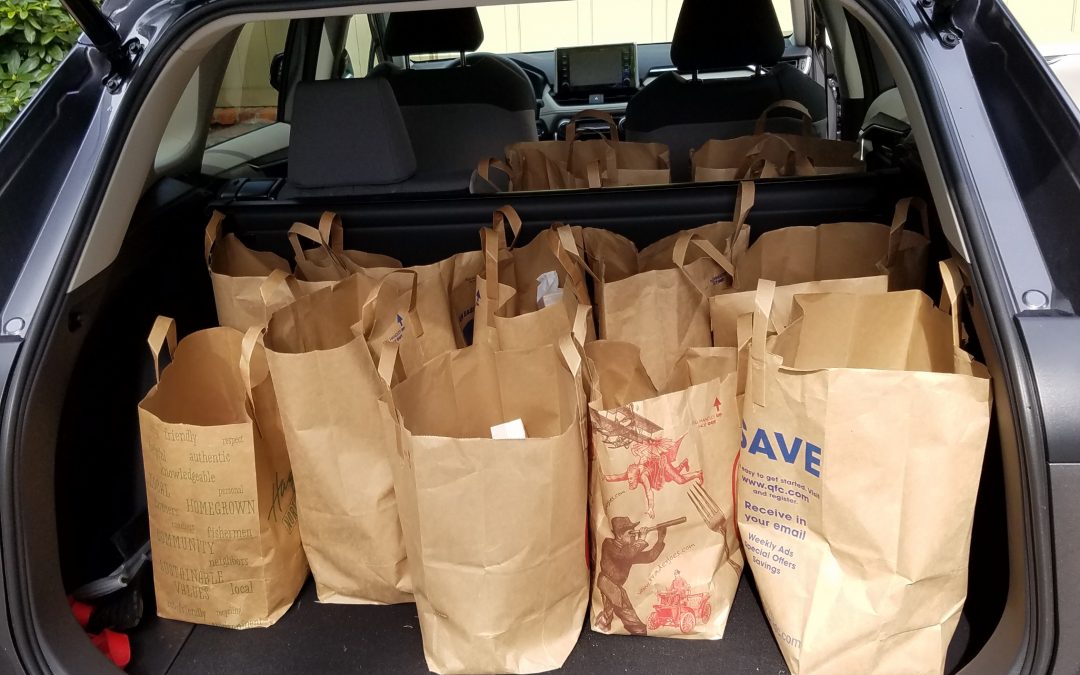
They’re coming back! Students will return to Maywood Hills Elementary in just a few weeks! It’s time for us to get back in gear and provide kids who need it with food to take home over the weekends. That means getting back in the habit of adding an item or two for ‘Totes’ when you do your regular shopping.
If you aren’t familiar with the program – or just need a refresher, here are the basics:
Totes To Go is a system through which schools in our general area identify students who are at risk of missing meals over weekends, when school breakfast and lunch programs aren’t available. We know that hungry kids can’t learn well, so we provide a variety of food items that are placed in a backpack for each of those students to take home with them on Fridays. They are mostly single serving items as the living situations of the students may be unstable. WUUC has been participating in the program for many years, but COVID put us on hold. Now we’re starting up again!
Each month we collect: Individual shelf stable milk boxes, Canned meat or fish, Individual serving cereal boxes, Peanut butter, Snacks, Juice boxes, Crackers, Single serving canned fruit, One-dish meals, Granola bars
We again hope to support 15 students. That means we need 60 of each ‘individual’ size items, 30 canned meat or fish, 15 jars of peanut butter and 15 sleeves of crackers (usually salt crackers or Ritz-type).
Please bring your items by Sunday, Aug 29. They can be left in the new shed on the west side of the church building. Once we are back in person we’ll use the baskets inside the church. Questions? Contact Grace Simons or John Hartman, co-coordinators.

by WUUC | Jul 23, 2021 | Announcements
By John Hartman
My wife, daughter, son-in-law, two grandsons and I recently visited Glacier National Park. This was late June, so right in the middle of the hot stretch we all suffered through. Even though it was hot and crowded we had a wonderful time. The lakes and streams were refreshing. The mountains were awe inspiring, even through a slight haze. I never grow tired of the Going-to-the-Sun Road — a miracle of engineering and one of the most beautiful highways in the world.
It wasn’t long after our visit to Glacier that I came across an article by Diana Six, an entomologist at the University of Montana. She has spent the last 30 years researching how bark beetles are decimating pine forests. She also made a recent trip to Glacier. I quote from her article:
“Glacier National Park. 97F in June. Little snow left. 75F degree water. Glaciers disappearing. This is what we hear. But the worst is what most never see.”
Loss of snow and warm lake water so early in the season is devastating to fish and algae. The hot temperatures cause early blooming and wilting of the flowers. The bees and hummingbirds that depend on them are in trouble; their food is gone.
“There have been total losses of a lot of baby birds this year. You see these ospreys and eagles sitting on top of the trees in their nests and those young, they just can’t take the heat. Year after year of that and you lose your birds.”
“People seem to think of extinctions as some silent, painless statistic. It’s not. You look at birds that can no longer find fish because they’ve moved too far off shore. They’re emaciated, they’re starving to death. We are at a point that there’s nothing untouched.”
“I had gone from being an ecologist to a coroner.”
One of the joys of my visit to Glacier was teaching my 5 year old grandson, Miles, about wildflowers. We walked down the trail and I pointed out a wildflower and gave it a name. Pretty soon he was happily going down the trail pointing out the wildflowers he knew.
What can you do about climate change? It can be changing laws or it can be teaching a child to appreciate nature. Just do something.
John Hartman
by WUUC | Jul 23, 2021 | Announcements
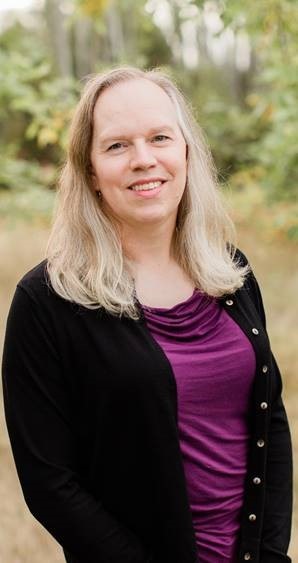
Hello, I’m Jane Flood. I am a school teacher. I started the Seattle Pacific University’s teacher preparation program in 2015. The program took a year, my first class was in 2016.
As I was transitioning out of my military career I was looking for something that I would find fulfilling. I started volunteering in Sebastian’s first-grade classroom. I was surprised at how much I enjoyed working with the kids. His teacher was amazing; she really helped Sebastian, and I wanted to help other children like she did.
Last year, I had a student who was pretending to read. I knew he was bright, so we started reading together one-on-one. We read article after article, and we chatted about the information we had read. It was really fun, and we got to know each other pretty well. At one point we were reading a really fun book together. He thought the rest of the class would enjoy it, too, so we started over with the full class. He got all the lower readers to read dialogue for the characters in the book while I narrated. At the end of the year, he sent me a thank-you note. He confessed he had never enjoyed reading before, and he thanked me for spending the time and giving him a love of books.
I thought teaching was going to be an easy job, but it is intense. We spend many unpaid hours every week planning lessons and collecting materials. When we have a student who is not progressing, we work extra hard to try and understand them and to figure out how to move them forward. I love that challenge, and when you see a kid do something they would never have attempted earlier, it feels great knowing you just changed someone’s life.