by WUUC | Feb 13, 2020 | Announcements
By Donna Johnson
The WUUC Worship Team is committed to ongoing evaluation and improvement. At our retreat last fall we talked about the limitations of what we had been doing for evaluation and developed a new approach. We determined that the overall purpose of our evaluation was to optimize the quality of our worship. Team members developed an evaluation template that asks:
- Were there opportunities for emotional response,
spiritual connection, deepening, and transformation?
- Did the service elements combine in a cohesive
flow?
- What worked? What might be? What should be?
The Worship Team schedules an evaluator from the team for each week. The evaluator uses the evaluation template to draft comments about each element of the service. After the service the evaluator, Worship Associate and others who were involved in the service meet to discuss the things that went well, things that could have been changed, and any lessons learned that can be applied to future services. After the post-service meeting the evaluator finalizes the template, and it is stored on google docs. The whole team reviews the completed templates at our monthly meetings and note important take-aways in the meeting minutes.
We started this process in November 2019, and so far, the team is pleased with how the process is going. Worship Associates appreciate being able to talk about the service with colleagues when the experience is fresh. The team’s monthly discussions seem more helpful and focused because there is a designated person to lead the conversation about each service, and the completed templates are a great way to capture things that might be forgotten if we just relied on our memories.
by WUUC | Feb 13, 2020 | Announcements
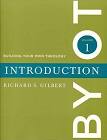
There are a few more spots open for the Building Your Own Theology (BYOT) class starting on a new day and time — Tuesday, March 3, 6:30-8:30 p.m. in the WUUC Library. Read below for more information or let Lauren Soliday or Chuck Bean know of any questions you may have.
Sign up HERE.
Greetings fellow seekers of truth. BYOT is an older UU curriculum, but still very relevant to our lives. The class will provide material and exercises to stimulate introspection and discussion on your beliefs and worldview. Your participation will either strengthen what you believe or challenge you to stretch your views. Sound interesting? Please consider joining us this spring for exploring and getting to know yourself and each other better. All are welcome; invite a friend, if you’ve taken it before, but want a “tune-up,” new to WUUC, or long-standing members.
Building Your Own Theology
8 Tuesdays, March 3 – April 21, 6:30-8:30 p.m.
WUUC Library
As
Unitarian-Universalists, we are all theologians. Our church, as a spiritual
community, encourages each of us become more fully aware of own personal credo
(Latin for “I believe.”) This 8-week UUA curriculum will help you examine your
values and beliefs about God or ultimate reality, ethics, and the meaning and
purpose of life. You’ll search for what is true in your life. Through a
combination of reflection, group discussion, study, and writing, you’ll examine
your own spiritual history and articulate your own credo. How does your
life experience inform your faith?
Please
note – this is not a “drop-in” class. It’s important to attend all eight
sessions, since they build on one another.
Facilitators: Chuck Bean (chuckcbean@hotmail.com) & Lauren Soliday (lsoliday@wuuc.org)
Please
let us know your interest ASAP. Write or call with questions or just SIGN UP HERE! Thanks!
Session 1 – “Doing
Theology – Getting Started” – to think about/ depict our own “ultimate reality”
at various points in our lives, create spiritual autobiography
Session 2 – “Your
Religious Odyssey – Autobiography with a Spiritual Twist” – share our spiritual
journey & write our own epitaphs (ie: inscription on tombstone)
Session 3 – “Ultimate
Reality – Creating an Honest God” – consider the nature of Ultimate Reality by
whatever name we call it and survey our personal beliefs and attitudes about
God and prayer.
Session 4 – “Ethics as Unenforceable Obligations” – create a list
of our own ethical Ten Commandments
Session 5 – “We are the Meaning Makers” – explore the sources of
meaning for religious liberals
Session 6 – “Suffering and Meaning” – consider human suffering,
learn how different religions have understood it
Session
7 – “Death and Immortality” – explore beliefs about death and immortality
in various religious/cultural traditions, explore our personal feelings
Session 8 – “Wrapping It Up – A Credo”

by WUUC | Feb 13, 2020 | Announcements
Harmony for Hope
Les Six-and-a-half
Sunday, March 15, 7:30 p.m.
$25/15 students and seniors
Woodinville Unitarian Universalist Church, 19020 NE Woodinville Duvall Rd, Woodinville, WA 98077
orcamusic.org
206-368-7091
Music of Poulenc, Tailleferre, Schulhoff, and Villa-Lobos
Performers: Ben Hausmann, Oboe; Sean Osborn, Clarinet; Dana Jackson, Bassoon; Cristina Valdes, Piano
The Harmony for Hope 2019-20 season continues in Woodinville on March 15 at 7:30 p.m., with a concert called Les Six-and-a-half. Proceeds will benefit The Sophia Way, an organization committed to ending homelessness for women.
Performers include Seattle Symphony oboist Ben Hausmann, Metropolitan Opera clarinettist Sean Osborn, Pacific Northwest Ballet bassoonist Dana Jackson, and University of Washington pianist Cristina Valdes. The program includes music by two composers of Les Six, Francis Poulenc and Germaine Tailleferre, along with music by Erwin Schulhoff and Heitor Villa-Lobos. Les Six was a loose collection of composers from early 20th-Century France, whose influence was felt far and wide, and is still felt today.
The Orca Concert Series and Harmony for Hope present the finest in Chamber Music featuring Woodwind, Brass, Keyboard, and String instruments. Featured musicians include those who have performed with: The New York Philharmonic, Berlin Philharmonic, Los Angeles Philharmonic, Seattle Symphony, Philadelphia Orchestra, St. Paul Chamber Orchestra, Marlboro Festival, Seattle Chamber Music Festival, National Symphony, Cleveland Orchestra, Pacific Northwest Ballet Orchestra, Metropolitan Opera Orchestra, and in recital at Carnegie Hall and the Kennedy Center. Experience the Transcendent.
At The Sophia Way, the goal is to make homelessness rare, brief and one-time event for the women experiencing it. The women who come to the shelter are in survival mode. The shelters offer them a warm, safe space to take a shower, rest and sleep, and nourishing food to give them strength. Sophia Way case managers focus on their overall wellbeing -– physical, mental, and financial. Their aim is to move the women into a stable and secure environment – their own home. https://sophiaway.org
by WUUC | Feb 12, 2020 | Announcements
By Wendy Condrat
Trees that communicate, cities and world capitals inundated by rising seas, words of a more hopeful future for our planet: these are some subjects in the newest genres that deal with the looming existential threat of climate change.
As scientists, world organizations, and
activists sound the alarm against inaction, a new crop of writers have sought
to depict a future world if humans don’t do something.
In Pitchaya Sudbenthad’s “Bangkok Wakes to Ruin,” where Thailand’s capital city lies in ruins after it is submerged under water, the author relates: “As the climate crisis becomes more apparently urgent, related narratives become even more necessary as a mirror that both reflects and warns.”
Here are other current recommended fictional reads
which illustrate our current and future world crisis.
“Cloud Atlas” by David Mitchell; “Parable of the Sower” by Octavia Butler; “Gold Fame Citrus” by Claire Vaye Watkins”; and “The Overstory “ by Richard Powers.
In non-fiction, “books about social and ecological change too often leave out a vital component: how do we change ourselves so that we are fully strong enough to fully contribute to this great shift? Naomi Klein states that “Active Hope” fills this gap beautifully, guiding readers on a journey of gratitude, grief, interconnection and, ultimately, transformation.
Joanna Macy, esteemed ecophilosopher, and author of inspirational reads such as “The Work That Reconnects “ and “Active Hope – How to Face This Mess We’re in without Going Crazy”, offers a guide and a process to equip us to “face this mess … in The Great Turning to a life-sustaining society.
Joanna Macy offers readers hope in a world that many will find redemptive and filled with promise and could serve our congregation and all readers as a tool for ongoing discussions towards healing.
by WUUC | Jan 30, 2020 | Announcements
By John Hilke
This month’s Notes for Earth visits an ongoing controversy over purchase of carbon offsets (or greenhouse gas emissions more generally). Carbon offsets involve donating funds that target reductions in carbon emissions. Typically, carbon offsets involve preservation or expansion of carbon absorption areas (rain forests, for example) or investments in projects that will lead to reduction in carbon emissions from electricity generation, agricultural, or manufacturing processes.
There are two major controversies about carbon offsets. The first controversy concerns the net benefits of different types of carbon offset investments. Generally, it is best to support carbon offset programs that have been certified by a third-party certification organization. Historically, many carbon offset programs were ineffective, misleading, or fraudulent.
The second controversy concerns the ethical implications of carbon offsets. Some have compared carbon offsets to indulgences — simply an excuse to keep on sinning — but with less guilt. An alternative to carbon offsets is to live a carbon-neutral (zero net carbon emissions) lifestyle. Given existing technology, costs, and work or family obligations, few people outside of the tropics have been able or willing to live a life with zero net carbon emissions. For some, the best practical and ethical alternative appears to be taking the steps you can to reduce your carbon footprint and then voluntarily tax yourself to offset the remainder of your carbon emissions (and perhaps some of those of the wider community).
For many people, air
travel may be the largest component of your carbon emissions in some
years. Unlike many sources of carbon
emissions, suppliers of airline services have become quite active in offering
trip-specific carbon offset programs and some airlines offer access to their
carbon offset programs more generally.
If this is your situation, you might want to consider the airline carbon
offset programs.
I have found the linked
review of airline carbon offset programs to be helpful. Perhaps you will find it informative as
well. https://thepointsguy.com/guide/everything-you-need-to-know-carbon-offsetting-flights/. My
personal reaction is that carbon offsets are surprisingly affordable — which,
naturally raises troubling questions about why society has not made more of
these investments. For a more general
assessment of your carbon footprint, you can check out several different
calculators by searching on your browser for “carbon footprint calculators.” The U.S. Environmental Protection Agency
still offers a carbon footprint calculator at https://www3.epa.gov/carbon-footprint-calculator/.
John Hilke for WUUC’s
Advocates for Social Justice Climate Justice Ministry, Wendy Condrat, Chair.

by WUUC | Jan 30, 2020 | Announcements
By Terry Santmann
Board Secretary
At the Jan. 8 meeting, DD Hilke attended to collect suggestions from the Board regarding nominations for the three slots opening on the board in the next year as well as for slots open on the nominating committee itself and the endowment committee.
The Board reviewed the previously stated goals for the year (from August 2019 minutes) and tweaked goals for the coming months. The Board plans deep dives on the following topics in the coming year:
- membership activities,
- policy development,
- community conversation,
- intergenerational services,
- small group development and support,
- governance suggestions regarding decision-making in declared emergencies,
- disruptive behavior policy in relationship with developing a right relations committee, and
- community
- gradual review of each area of ministry in the Renewal of Fellowship process, in sequence, between now and May
Enough individuals have signed up to complete an application for a Chalice Lighters grant. Donors have made money available to purchase the necessary internet upgrade. John will contact Comcast to proceed immediately. WUUC will apply for a grant from Chalice Lighters for further technology and accessibility upgrades.
The board will develop a formal process for reviewing the insurance coverage with the expectation that a board member, representatives from the finance and BAG committees, and the minister will participate in the review. John, Rev. Diana, Jim, and Terry will form a task force to update the Governance Manual Part I Policies.
At the Jan. 22 meeting, the Board reviewed WUUC projected expenses for FY 2020-21 and authorized presentation of the same to the congregation at the upcoming Town Hall meeting.
The Board approved the renegotiation of WUUC’s mortgage to a 15-year maturity with a 15-year amortization, rate to be fixed at 4.7% for 15 years and closing costs to be rolled into the new loan amount.
Rev. Diana is authorized to proceed with hiring a choir director.
The Board is working on the development of a policy for WUUC Governance in Declared Emergencies.
You can find minutes from the Board’s Dec. 10 meeting here: https://drive.google.com/file/d/1xFCUOoBxH7PzNeveTDCVnvO7c1jwG35z/view?usp=sharing
Minutes from the Jan. 8 meeting are available here: https://drive.google.com/file/d/1hyMIMdp9NIOl0ZmEIVdUuyH8jlMdt6u-/view?usp=sharing
Minutes from the Jan. 22 meetng are available here: https://drive.google.com/file/d/1MSFBM0KbFM_GRpMSUJcEqQTmuuypglIl/view?usp=sharing